
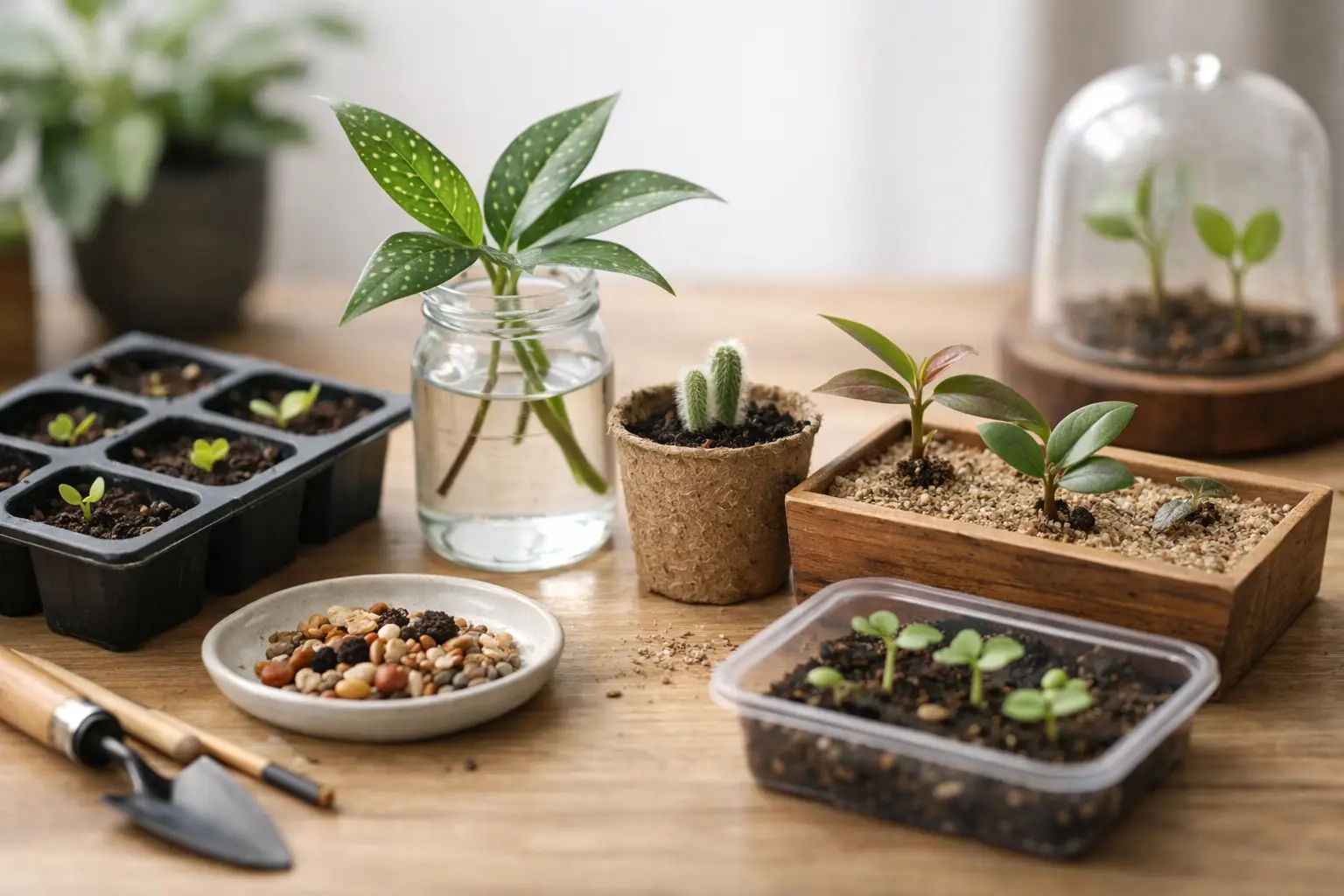
A packet of seed can look deceptively uniform: small, dry, and apparently ready for soil. Yet home propagation succeeds or fails on the conditions each species evolved to recognize. A Mediterranean aromatic, a temperate woodland perennial, and a tropical tree may all be sown in the same week, but they should not be treated as the same horticultural project.
For collectors, this is part of the appeal. Raising an uncommon plant from seed creates a more deliberate relationship with its origin, life cycle, and eventual place in the garden or greenhouse. The aim is not simply to produce the greatest number of seedlings. It is to establish healthy, correctly identified plants with the vigor to become lasting specimens.
Before choosing a tray, medium, or heat mat, consider where the species grows naturally. Botanical family can offer useful clues, but species-level information matters more. Members of the same family can share broad tendencies while differing substantially in dormancy, moisture tolerance, or response to light.
Seeds from cool-temperate perennials often arrive programmed for a winter interval before spring germination. Valeriana officinalis, for example, is associated with moist temperate habitats and benefits from even moisture during establishment. A tropical or subtropical species such as cashew, Anacardium occidentale, has an entirely different expectation: warmth is not an optional enhancement but a basic condition for growth.
This is why a single universal seed-starting routine has limits. It may work well for fast annuals selected for broad reliability, yet it can mislead growers working with medicinal plants, woody taxa, or species collected from climates with pronounced wet and dry seasons. Start with the species name, then ask four practical questions: Does the seed require warmth or a cold period? Is it naturally short-lived? Does it germinate in light or beneath leaf litter? Is it adapted to steady moisture, seasonal dryness, or rapid drainage?
Those answers determine the method more reliably than the size or appearance of the seed.
A home propagation area does not need to resemble a commercial nursery. It does need to be clean, stable, and easy to observe. A bright windowsill can work for some species, but it often introduces uneven temperatures, weak winter light, and abrupt drying. A modest indoor setup with trays, clear covers, a light source, and optional bottom heat gives the grower greater control.
Use a fresh, fine-textured medium that holds moisture without becoming airless. For most seed work, a sterile or low-nutrient sowing mix is preferable to rich potting soil. Fertility is rarely the missing ingredient at germination; oxygen around the seed is more often the issue. Press the medium lightly rather than compacting it, then moisten it fully before sowing so fine seeds are not displaced by a hard first watering.
Containers should be selected for the crop, not just convenience. Small cells reduce disturbance for seedlings that resent root handling, while shallow trays make sense for very fine seed sown in groups. Woody plants with a developing taproot may need deeper modules earlier than compact herbaceous seedlings. Labels should include the full scientific name, sowing date, treatment used, and seed source or accession note when relevant. Once several related-looking seedlings are growing together, memory is a poor cataloging system.
The familiar rule of sowing at roughly twice the seed’s thickness is a useful starting point, not a law. Large seeds generally need enough coverage to remain evenly moist and anchored as roots emerge. Very fine seeds may need only firm contact with the surface. Burying them can deny them the light cues needed for germination or simply place them too deep to reach the surface with their limited stored energy.
Sow sparingly whenever possible. Dense sowing seems efficient until seedlings crowd one another, remain damp for too long, and become difficult to separate. For valuable or limited seed, deliberate spacing makes it easier to identify individual performance and remove a failed seedling before decay spreads.
Light should be treated as a germination signal as well as a source of energy after emergence. Some species germinate best with light exposure, while others are indifferent or prefer darkness. If the requirement is uncertain, a useful cautious approach is to divide a small seed lot between surface sowing and light coverage. This produces information for the next sowing without risking the entire collection on one assumption.
For many unusual perennials, shrubs, and trees, slow or uneven germination is not evidence that the seed is poor. Dormancy is an ecological strategy. It prevents a seed from opening at the first mild spell, only to meet frost, drought, or an unsuitable season.
Cold stratification is among the most relevant treatments for temperate species. It usually means holding moist seed or a sown container at refrigerator temperatures for a defined period before warmth is introduced. The medium should be moist rather than saturated. Excess water and long storage create the conditions for fungal loss, especially where air exchange is limited.
Some species also have hard seed coats that delay water absorption. Scarification – carefully nicking, abrading, or otherwise weakening the outer coat – can help, but it is a treatment to use with precision. Cutting too deeply damages the embryo; soaking a scarified seed for too long can invite rot. Large legumes and certain woody taxa may respond well to this approach, while many small-seeded plants do not need it at all.
Freshness matters especially for seeds that are naturally short-lived or sensitive to drying. Tropical tree seed often belongs in this category. If a species is described as recalcitrant or short-lived, sow it promptly rather than treating it like a long-storable annual. Conversely, a species with physical dormancy may remain viable for years but still require a specific trigger to germinate.
Most failed sowings are not caused by one dramatic mistake. They decline through small inconsistencies: a propagator that overheats in afternoon sun, a tray allowed to dry at the surface, or a cover left sealed after seedlings emerge. Temperature affects both speed and percentage of germination. A heat-loving species may stay dormant in a cool room, while a temperate plant can become weak or erratic if kept too warm.
Bottom heat is particularly useful for tropical and subtropical species, but it should warm the root zone gently, not cook the medium. Check the actual temperature at seed level with a thermometer. The setting on a heat mat is less meaningful than the conditions inside the container.
Humidity covers are useful before emergence because they slow evaporation. Once seedlings are up, begin increasing ventilation. Stagnant, saturated air favors damping-off, a rapid collapse of young stems caused by several soilborne pathogens. Good hygiene, sensible spacing, and moderate airflow are more dependable defenses than constant spraying or excessive intervention.
Water from below when practical, especially around tiny seedlings, then allow the surface to become lightly less wet between waterings. This does not mean letting the root zone dry out. It means avoiding the permanently glossy, waterlogged surface that signals poor air exchange.
A seedling is ready to move when it can be handled with enough root structure to hold its medium together, usually after developing true leaves beyond its first seed leaves. Waiting too long can be just as troublesome as transplanting too soon. In crowded trays, roots entangle, and the strongest seedlings begin to shade the rest.
Handle seedlings by a leaf whenever possible, not by the stem. Leaves can regrow; a crushed stem rarely can. Move each plant into a container appropriate to its projected growth rate and root habit, using a slightly more nutritive but still free-draining mix. Then give it a few days of moderated light and protected conditions while the roots reestablish.
Do not rush rare seedlings into the garden merely because they have survived the germination stage. Acclimation is a separate process. Indoor-grown foliage is tender, and abrupt exposure to direct sun, wind, cool nights, or heavy rain can set a plant back severely. Harden plants off gradually, extending outdoor exposure over a week or more according to weather and species.
The most useful propagation tool is often a notebook, spreadsheet, or labeled photo archive. Record sowing date, pretreatment, medium, temperature range, first emergence, final germination, and observations about seedling behavior. Over time, these notes become a private cultivation reference tailored to your climate, water quality, and growing space.
They also make failures productive. If Schinus molle or Rhus typhina performs poorly under one treatment, a revised approach can be tested with a later batch rather than repeating the same method from memory. For collectors maintaining a broad living library, that accumulated knowledge is nearly as valuable as the plants themselves.
Home propagation rewards patience, but it does not ask for blind patience. Read each species as a record of climate and adaptation, give it conditions that make botanical sense, and let careful observation guide the next seed you sow.