
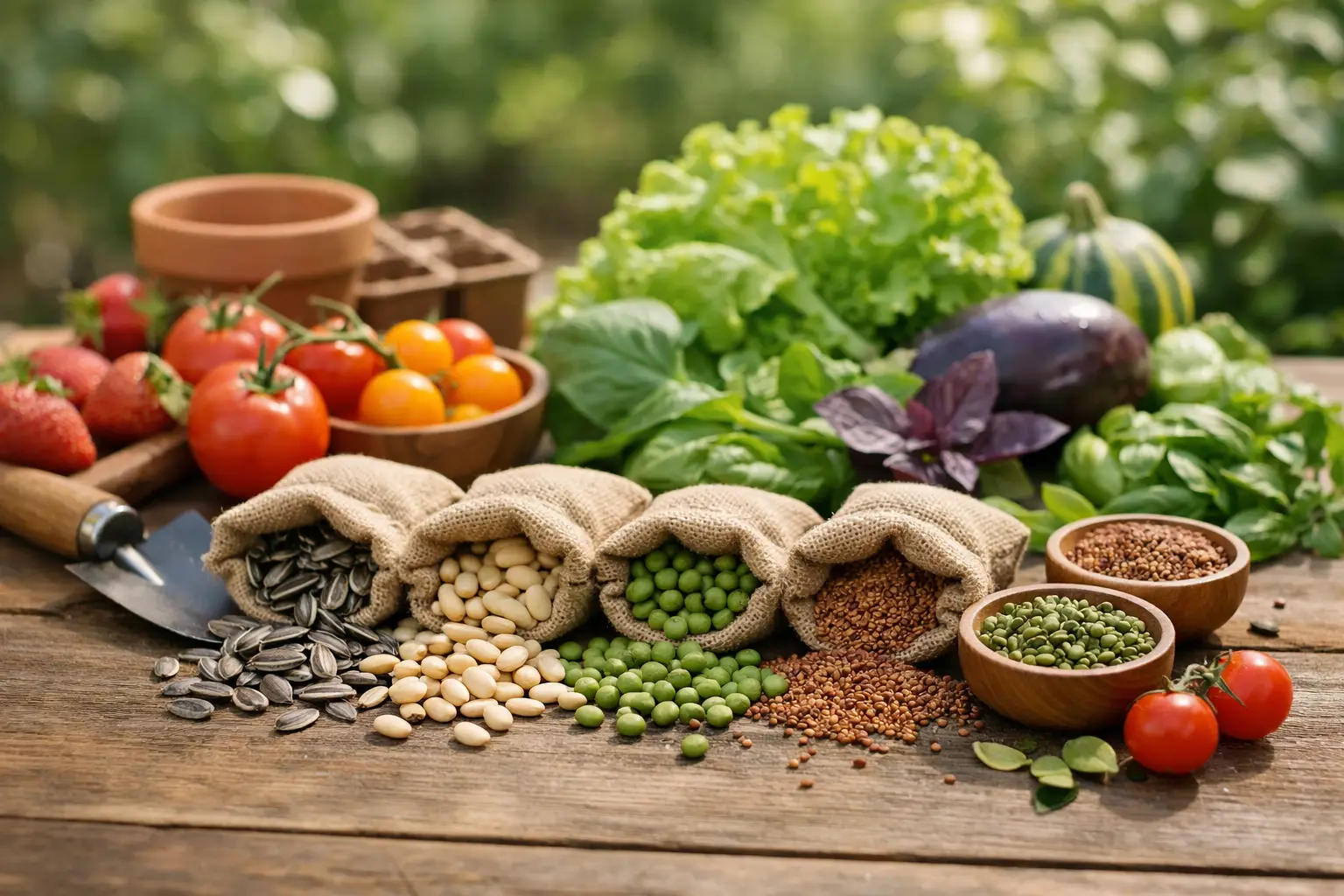
A packet of edible landscape plant seeds can do more than supply a season of produce. It can establish a fruiting canopy, a medicinal border, a fragrant hedge, or a specimen with a culinary history worth preserving. For growers with patience, the most rewarding edible landscapes are not built around a familiar row of annual vegetables. They are composed of plants whose form, habitat value, and harvest mature together over years.
This approach asks a different question before sowing: not simply, “What can I eat?” but “What useful plant deserves a permanent place here?” The answer depends on climate, available space, soil drainage, winter temperatures, and how much attention a young woody plant can receive during its first few seasons.
A useful edible plant need not look like a conventional food crop. Some belong in the upper layer of a garden, where they eventually cast shade and produce fruit. Others make sense at eye level as aromatic shrubs or in the foreground as perennial herbs. Selecting by mature function is more reliable than selecting only by novelty.
Trees are the slowest and often the most consequential choice. A seed-grown tree may take years to reach bearing size, and seedlings can vary from their parent plant. That variation is part of the appeal for collectors, but it also means seed is not the right choice when a named cultivar, exact fruit quality, or predictable dwarf habit is essential.
For warm, frost-free settings, Anacardium occidentale (cashew) is an especially distinctive edible tree. Its familiar nut develops beneath a swollen, colorful cashew apple, giving the plant both botanical interest and a tropical presence. The raw shell and its caustic compounds require care, however. Cashew is not a casual backyard nut crop for cold climates or for growers expecting a simple home-processing project.
Where winters are cool, focus on species naturally adapted to local cold and seasonal moisture. The guiding principle is simple: use ambitious trees as structural anchors only when their mature size and climate needs genuinely fit the site.
Edible shrubs are often the most practical place to begin. They can define an edge, soften a fence line, feed pollinators, and provide a harvest without overtaking the garden. Their scale also makes protection, pruning, and observation easier while plants establish.
Rhus typhina, staghorn sumac, is a compelling example for dry or difficult ground. Its velvety branching, dramatic autumn color, and upright clusters of red fruit make it an ornamental plant first at a glance. The tart fruit can be steeped and used for a sumac-style drink or seasoning. Correct identification matters: do not confuse edible red-fruited sumacs with unrelated white-berried species that are not used this way.
Shrubs with edible fruit or aromatic foliage can be planted in a loose, naturalistic rhythm rather than rigidly spaced as a hedge. Leave enough room for air movement and mature width. A crowded border may look full in its first year, then become a pruning obligation just as it begins to produce well.
Herbs earn their place in edible landscaping because their usefulness is immediate, while their visual contribution can be subtle and enduring. Many provide texture, scent, flowers for beneficial insects, and leaves or roots for traditional preparations.
Valeriana officinalis is a fine choice for a moist, sunny to lightly shaded planting where its tall stems and pale flower clusters can move above lower perennials. It is principally associated with herbal use rather than everyday cooking, and its roots are traditionally harvested after the plant has developed. Place it where its mature height will not obscure smaller plants, and allow it sufficient moisture during establishment.
The distinction between culinary and medicinal use deserves respect. A plant’s history of use is not a universal instruction for consumption. Confirm identification, research preparation carefully, and consider individual health circumstances and medication interactions before using any medicinal species.
Scientific names are particularly useful when planning an edible landscape. Common names travel easily across regions and sometimes attach to more than one plant. Rhus typhina identifies a specific sumac. Anacardium occidentale identifies cashew. That precision helps a grower research hardiness, mature dimensions, germination requirements, toxicity concerns, and accepted edible parts before committing a space in the garden.
A considered seed selection should answer four practical questions:
These questions are especially significant with trees. Some species are dioecious, meaning male and female flowers occur on separate plants. Others are variable from seed, slow to flower, or dependent on specific environmental cues. Such qualities do not make them poor choices. They make them collector plants, best grown with clear expectations.
The most convincing edible landscapes do not resemble a catalog arranged in the ground. They use relationships among plant layers. A fruiting tree can provide high shade; a shrub can occupy the brighter edge beyond it; perennial herbs can cover open soil, draw pollinators, and offer harvests while the larger plants are still young.
Begin with the mature canopy rather than the empty bed. Mark where a tree will stand in ten or fifteen years, including its root zone and shade pattern. Then position sun-loving herbs beyond that future shade and reserve the transition areas for species that tolerate changing light. This prevents a common disappointment: planting a lush herb border beneath a young tree, only to lose it when the canopy closes.
Water needs should also shape the composition. Mediterranean or dryland species should not be forced into the same irrigation regime as plants that prefer consistently moist ground. Grouping plants with similar requirements produces a cleaner design and reduces avoidable stress. Good drainage is often more important than rich soil for woody species from warm or arid regions.
Rare and unusual seeds reward careful handling. Before sowing, learn whether the species needs cold stratification, scarification, warm conditions, light exposure, or a period of soaking. Some hard-coated seeds need help admitting moisture. Others lose viability quickly and should be sown promptly. Tropical species may germinate readily with warmth but fail later if temperatures fall outside their range.
Use a clean, free-draining medium and label every pot with the full botanical name and sowing date. This is not mere record keeping. Perennial seedlings can look deceptively alike when young, and a precise label preserves the connection between the emerging plant and its intended role.
Grow more seedlings than the final design requires when space permits. This is sensible insurance against uneven germination and natural variation. It also lets you select the strongest, most well-proportioned plants for permanent positions, while sharing or container-growing the remainder.
A young edible landscape is a living collection, not a production field. Heavy harvesting from a newly established shrub or perennial can weaken the very plant meant to become a lasting feature. Let roots develop, allow a tree to establish its framework, and take only modest quantities until growth is vigorous and consistent.
The same restraint applies to experimentation. Edibility is specific to species, plant part, ripeness, and preparation. Never rely on visual similarity, folklore detached from context, or an assumption that every part of an edible plant is safe. Cashew, for example, illustrates why botanical curiosity must be paired with informed handling.
Quinta dos Ouriques approaches seeds as purposeful botanical material: each species merits consideration for what it can become, not only what it can yield in its first season. That is the pleasure of an edible landscape. A carefully placed seedling may begin as a labeled pot on a bench and, with time, become the plant visitors ask about, the harvest you anticipate, and a permanent expression of your own horticultural judgment.