
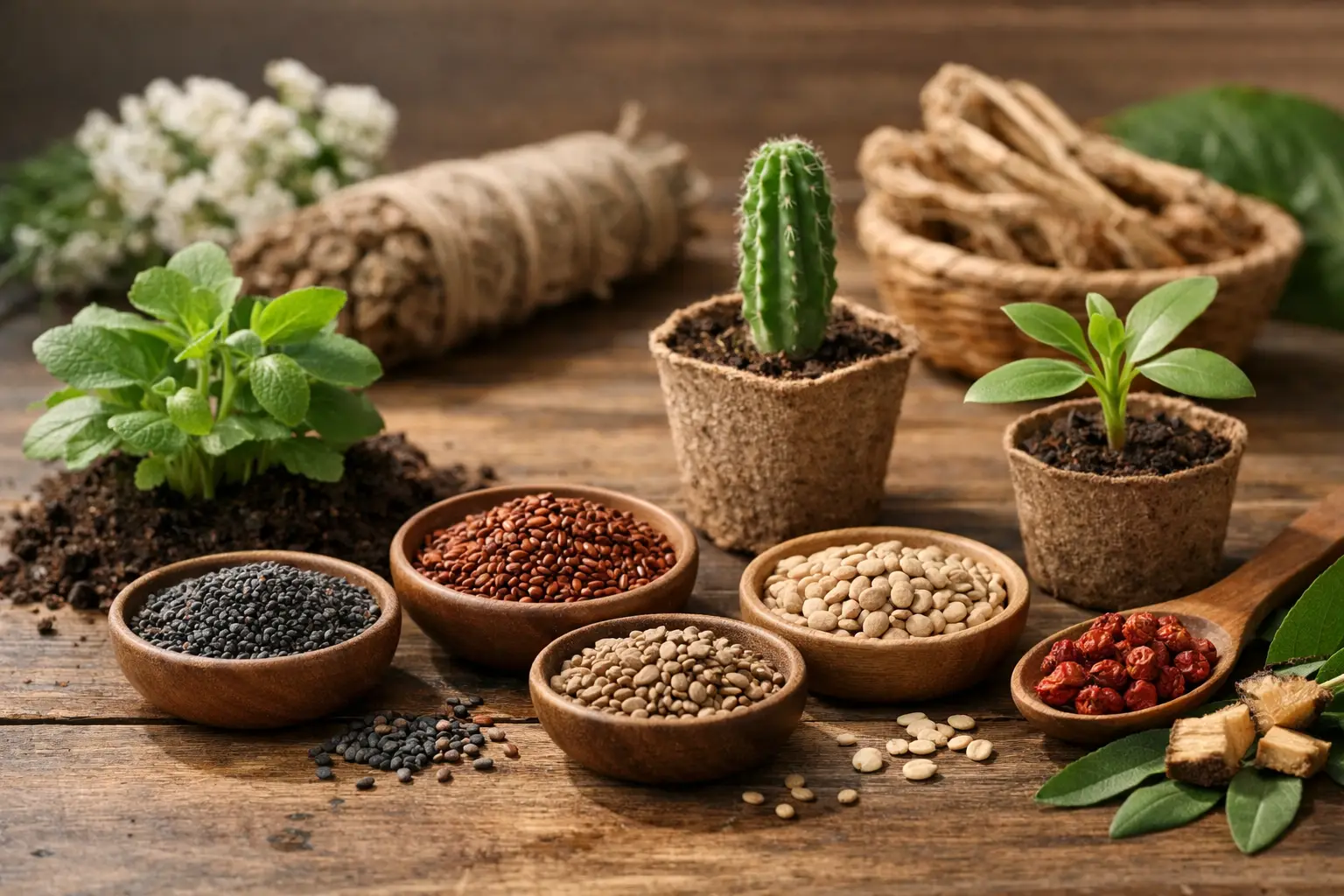
A packet of ethnobotanical plant seeds represents more than a future specimen. It carries a species’ ecological character, a record of human attention, and often a cultivation challenge that cannot be solved by treating every seed like a standard garden annual. For the collector, that combination is precisely the appeal: plants selected not only for appearance, but for their place in foodways, material culture, traditional horticulture, and regional landscapes.
Ethnobotany considers the relationships between people and plants. An ethnobotanical species may have been grown for food, fiber, fragrance, dye, medicine, ritual, tools, shelter, or ornament. The term does not mean that a plant is automatically medicinal, safe to ingest, or suitable for a particular use in every setting. It describes a cultural and botanical history.
This distinction matters when choosing seeds. A plant may be notable because its fruits have long been valued in a particular region, because its leaves were used in a local tradition, or because its wood and form shaped a working landscape. A thoughtful collection begins with the species itself: its accepted scientific name, family, native range, growth habit, and realistic needs under cultivation.
Scientific nomenclature is especially useful here. Common names travel easily between regions and are frequently applied to unrelated plants. A collector searching for Peruvian pepper, for example, should recognize Schinus molle rather than rely solely on a vernacular label. The same principle applies to medicinal valerian, Valeriana officinalis, whose cultivation requirements and identity are clearer when considered at species level.
The most rewarding selections suit both your interests and your growing conditions. Start with the question of what you want the plant to contribute to a collection. A specimen tree may offer a strong silhouette and an unusual biogeographic story. A perennial herb may belong in a dedicated medicinal plant bed. An edible species may be most valuable as a long-term greenhouse subject rather than an immediate harvest crop.
Climate is the first practical filter. Tropical trees such as cashew, Anacardium occidentale, and marula, Sclerocarya birrea, require sustained warmth and a long season. They can be compelling subjects for conservatories and experienced container growers, but they are not interchangeable with hardy outdoor trees. In a cool-winter climate, their value may lie in the challenge of cultivation and the opportunity to observe a rarely grown species at close range.
Temperate species offer a different proposition. Staghorn sumac, Rhus typhina, is hardy, expressive, and useful for gardeners seeking seasonal structure, dramatic fruiting heads, and a plant with a long history of practical and cultural associations. Yet it can spread by suckers where it is happy. Its suitability depends on space, maintenance tolerance, and local regulations, not simply on its ornamental merit.
Before ordering, consider these four questions:
These questions are not barriers to discovery. They are how a collector turns an interesting packet into a viable botanical project.
Ethnobotanical interest should lead to greater precision, not loose claims. Traditional uses are often specific to a place, preparation, community, and period of history. A statement that a plant was used in one tradition does not establish effectiveness, safety, dosage, or suitability for modern self-treatment.
For this reason, grow ethnobotanical plants first as plants. Learn their morphology, seasonal rhythm, and native ecology. Record germination dates, leaf form, flowering time, and response to heat or drought. If you later research historical uses, seek context rather than shortcuts. The most interesting stories are rarely reducible to a label such as “medicinal” or “edible.”
This approach also respects plants that have ceremonial or community-specific significance. Not every cultural association needs to become a consumer product or a home remedy. Sometimes cultivation is best understood as stewardship: maintaining a living connection to botanical diversity while acknowledging that knowledge has an origin and a context.
Many unusual species fail because the grower applies a familiar method to an unfamiliar seed. Ethnobotanical collections often include seeds from dry climates, woodland perennials, tropical trees, or species adapted to disturbance. Their dormancy mechanisms can differ substantially.
Hard-coated seeds may need scarification so that water can enter the seed coat. Seeds from temperate shrubs or herbaceous perennials may require a period of moist cold stratification before they germinate evenly. Some tropical species are best sown fresh and kept warm, while very fine seeds may need light at the surface rather than burial. The correct treatment depends on the species, not its category as edible, ornamental, or medicinal.
Use a clean medium with reliable drainage, label every sowing with the full botanical name and date, and avoid overwatering during slow germination. A label that says only “sumac” or “valerian” loses useful information once several pots are in progress. Include the species, seed source, pretreatment, and any environmental notes. This modest discipline becomes increasingly valuable as a collection grows.
Patience is a real cultivation tool. Germination that appears uneven may reflect natural dormancy rather than poor seed quality. At the same time, patience should not become neglect. Check moisture, temperature, air movement, and light regularly. The aim is consistent conditions, not constant interference.
A strong ethnobotanical collection benefits from a clear organizing idea. You might focus on aromatic members of the Lamiaceae, useful trees from dryland regions, historically cultivated fruit species, or plants associated with traditional herbal gardens. Family-based thinking can reveal useful patterns in seed form, fragrance, flower structure, and cultural use while still leaving room for surprise.
There is also value in contrast. A cool-climate herb such as Valeriana officinalis can sit conceptually beside a warmth-loving tree such as Schinus molle, even if they require entirely separate growing environments. The connection need not be geographic. It may be a shared interest in scent, regional food culture, resilient landscape plants, or the movement of plants through gardens and trade.
Avoid collecting only for rarity. Rare seeds are most satisfying when they become well-grown plants with a place in the garden, greenhouse, or nursery. A species that is moderately available but beautifully suited to your conditions may teach you more than a difficult tropical tree kept alive indoors without enough light.
Valeriana officinalis is a useful entry point for growers interested in historic medicinal gardens. It is a herbaceous perennial with fragrant flowers and a reputation that invites careful historical research. Grow it for its botanical character and garden presence, while treating any medicinal tradition as information requiring responsible interpretation rather than a cultivation promise.
Rhus typhina brings a markedly different form. Its velvety young shoots, broad compound leaves, and persistent red fruit clusters create a strong seasonal display. It is particularly suited to gardeners who appreciate native or naturalistic effects, provided they understand its potential to form colonies.
Schinus molle offers fine-textured foliage and an airy, often graceful habit in climates where it can grow outdoors. In colder regions, it asks for protection and may be better approached as a specialized container or conservatory subject. Its common name can obscure its identity, so botanical labeling is essential.
For growers with sustained warmth, Anacardium occidentale and Sclerocarya birrea offer a longer view. These are trees, not quick seasonal crops. Their presence in a collection is an invitation to learn about tropical ecology, germination behavior, and the realities of growing woody species beyond their native range.
The best ethnobotanical collection is not the one with the longest species list. It is the one in which each plant has been chosen with curiosity, grown with accuracy, and given enough time to reveal why people have valued it across landscapes and generations.