
Grow the legendary Banaba—a regal flowering tree whose leaves brew into a millennia-tested elixir for natural blood sugar balance. Spectacularly crowned with crape-like purple blooms that attract bees and butterflies all summer. Thrives in warm climates with minimal fuss. Start from seed and cultivate your own pharmacy.
Imagine harvesting leaves from a tree draped in imperial purple flowers—then brewing them into a wellness ritual passed down through centuries of Asian herbalism.
Native to South and Southeast Asia, L. speciosa is a common ornamental tree planted along roadsides, and in gardens and parks. Its reign spans from the Indian subcontinent to the Philippines, where it’s revered as Banaba—the Queen’s medicine. Lagerstroemia speciosa is designated as the state flower of Maharashtra, India, valued for its vibrant blooms and cultural significance.
**The Medicine in Your Garden**
Here’s what makes Banaba extraordinary: Lagerstroemia speciosa, commonly known as banaba, has been the subject of pharmacological research primarily due to its potential antidiabetic effects, attributed largely to corosolic acid, a pentacyclic triterpenoid found in its leaves. The extract from the leaves of this species has very important medicinal properties, including the control of type II diabetes. This isn’t folklore—leaf extracts are reported to stimulate glucose uptake in a dose-dependent manner in similar ways to insulin. Unlike insulin, these extracts do not appear to produce lipid synthesis therefore may be suitable for the treatment of hyperglycemia and obesity resulting from type II diabetes.
In addition to its ornamental importance, in some Asian countries, the leaves are used to make teas, currently widespread in other countries and known by the English name of Banaba tea. Because of its anti-diabetic effects with no evident side effect, its use is considered the most efficacious and practical approach for ‘ethno-pharmacologically’ managing diabetes. Beyond blood sugar: Medicinal Uses include Hypoglycemic (anti-diabetic), Diuretic, Antioxidant, Anti-inflammatory, Anti-obesity, Hypolipidemic (lowers cholesterol), Cardioprotective, Nephroprotective (kidney protective), Laxative (mild).
**Breathtaking Beauty, Easy to Grow**
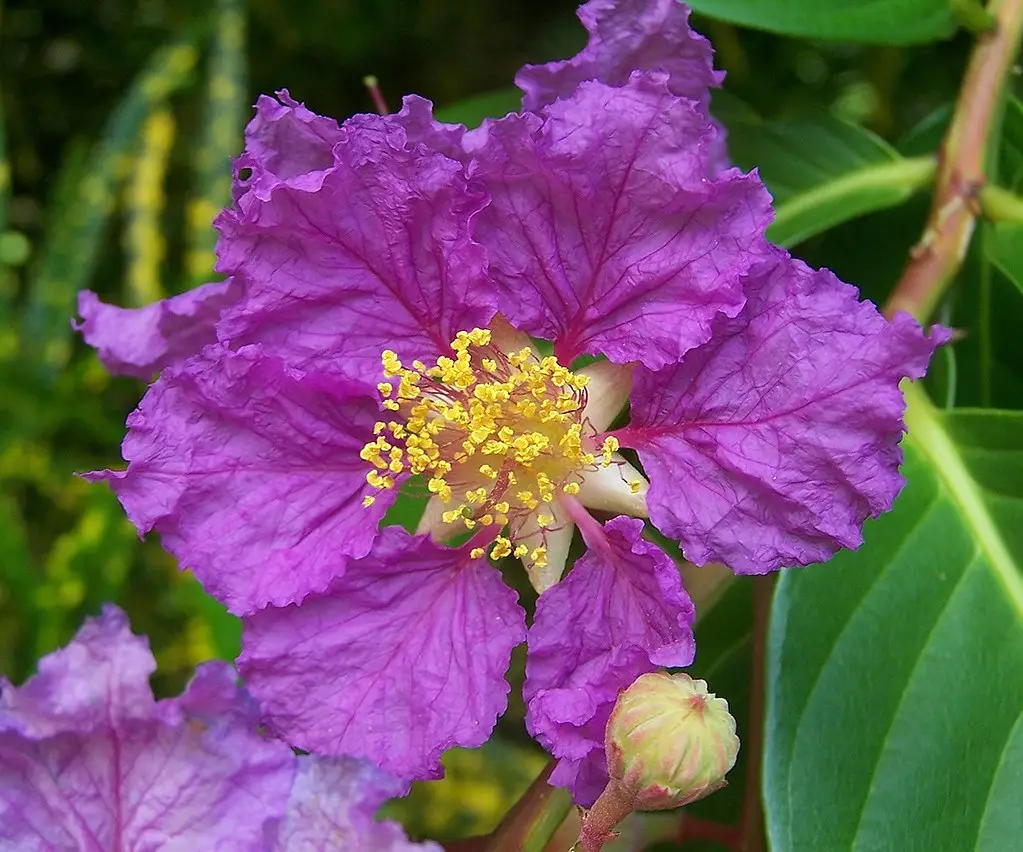
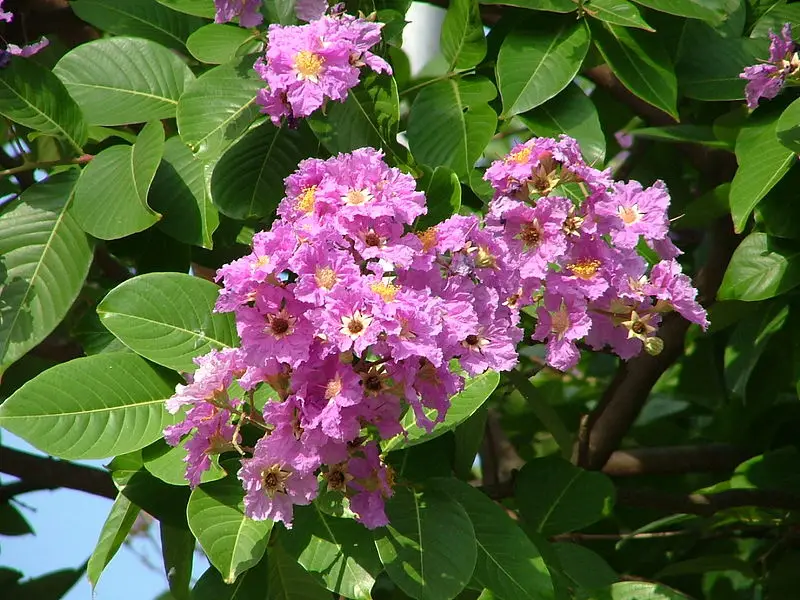
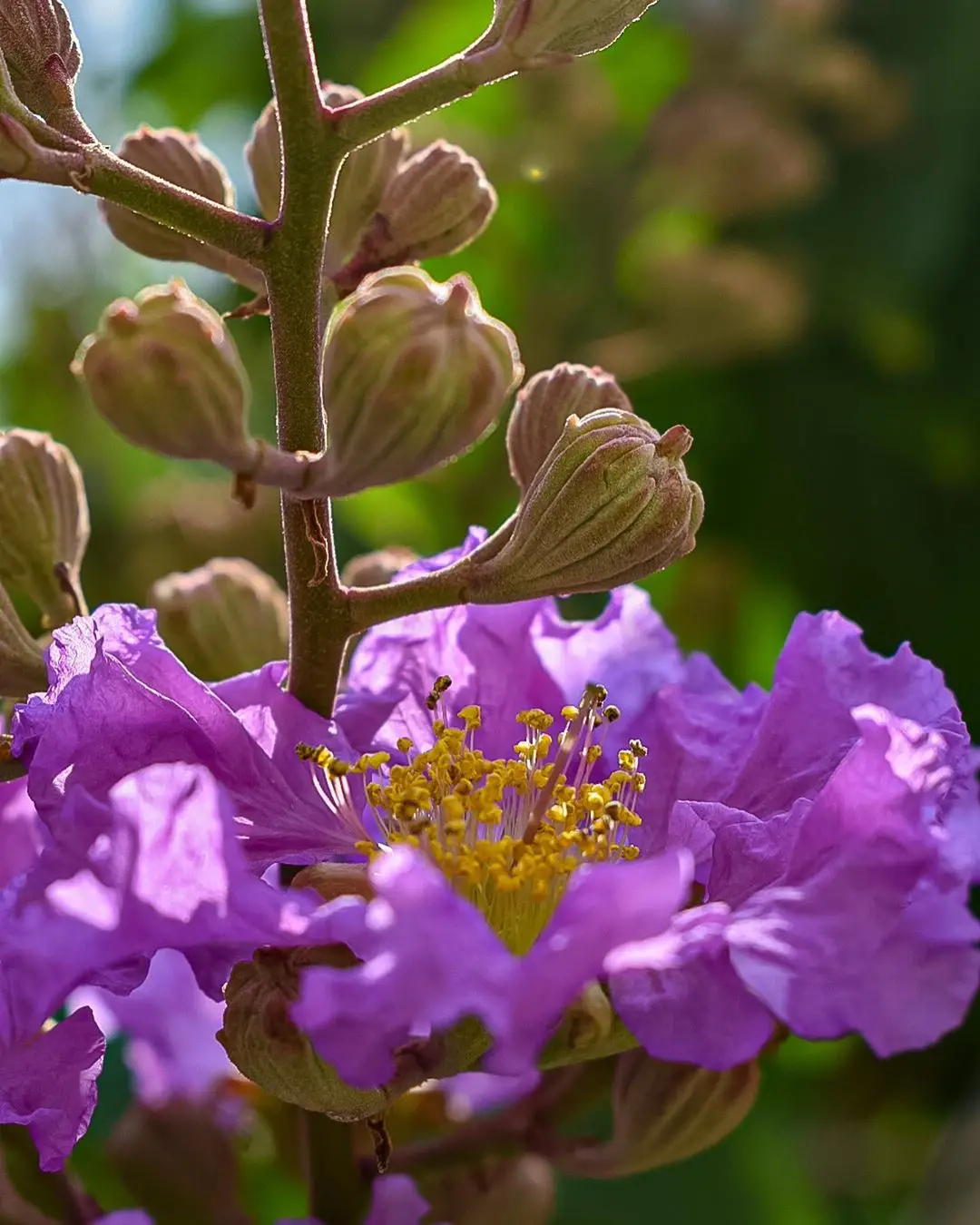
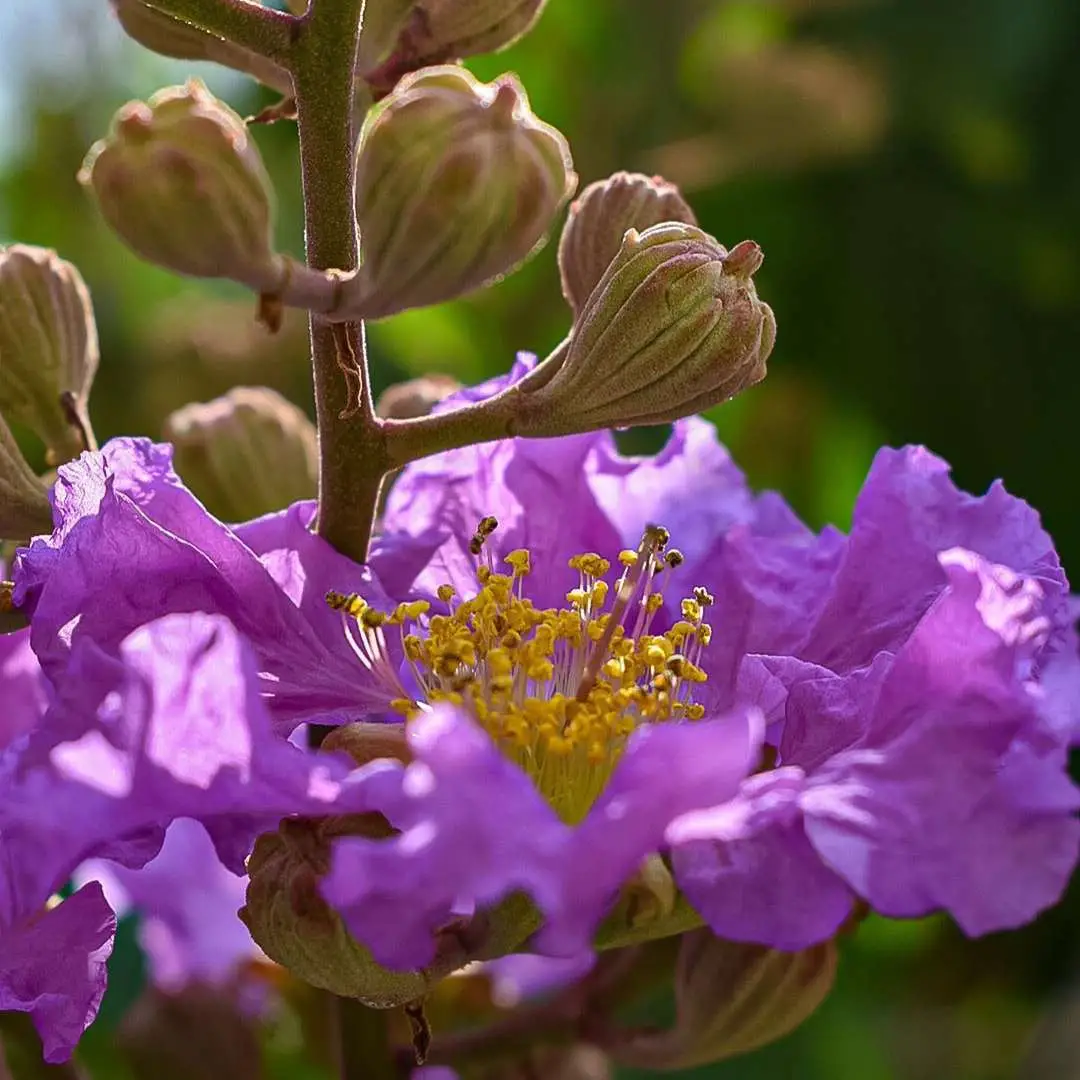
Flowers are large (5–7.5 cm across), with 6 wrinkled, crape-like petals in shades of purplish lilac, pink, or mauve. The tree has an attractive, smooth bark that peels off in patches, revealing a mottled surface underneath. They bloom in terminal panicles up to 40 cm long and are pollinated by large bees. A pollinator magnet, a living pharmacy, a sculptural masterpiece all in one.
Cultivation is refreshingly straightforward. This plant is native to India and is easily grown in full sun and with regular water. Prefers full sun for vigorous growth and flowering. Needs at least 6 hours of direct sunlight daily. Lagerstroemia speciosa grows best in deep, fertile, well-drained soil with a loamy texture. Most trees are adaptable to a range of soil pH values (5.5–7.5). Once established, Queen’s Crape Myrtle is drought-tolerant but performs best with regular watering. In cooler climates, Lagerstroemia speciosa is often grown in large containers and moved indoors for the winter.
**Your Seed, Your Legacy**
Grow Banaba from seed and you’re planting wellness, beauty, and heritage. In 3–5 years, you’ll harvest those legendary leaves. Flowering occurs 3–5 years after planting and the main flowering season is April–June with a second flush in July–August. Every cup of homegrown Banaba tea connects you to the same botanical wisdom that healers in the Philippines, India, and Japan have trusted for centuries. This is gardening with purpose.
Only logged in customers who have purchased this product may leave a review.
Reviews
There are no reviews yet.