Description
Afzelia quanzensis—the lucky bean tree—is native to Africa and steeped in centuries of cultural mystique, prized both for its extraordinary seeds and as a symbol of fortune and protection. The name itself whispers of distant origins: named in honor of Adam Afzelius of Uppsala, and specifically for the Cuanza River in Angola where it was first discovered.
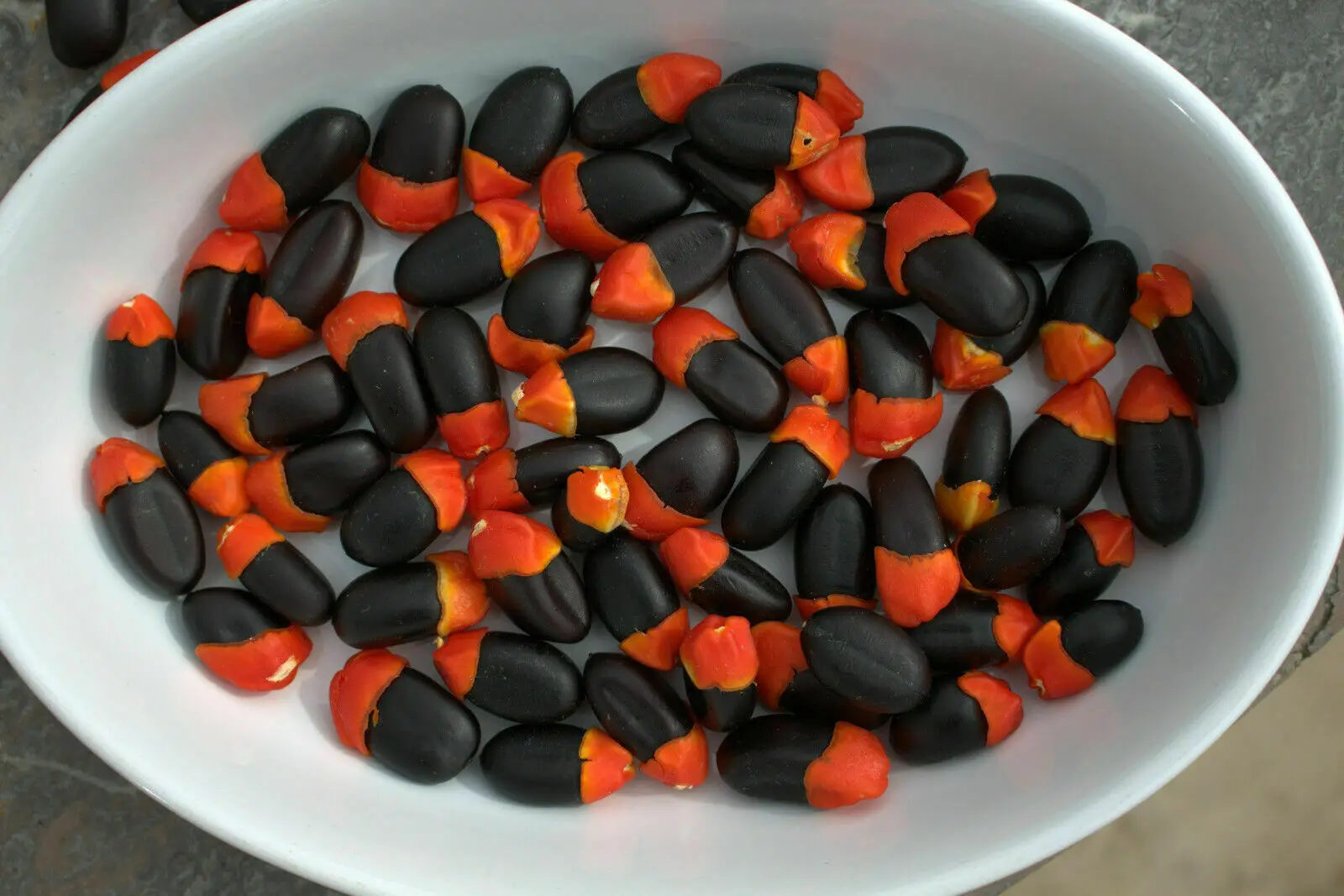
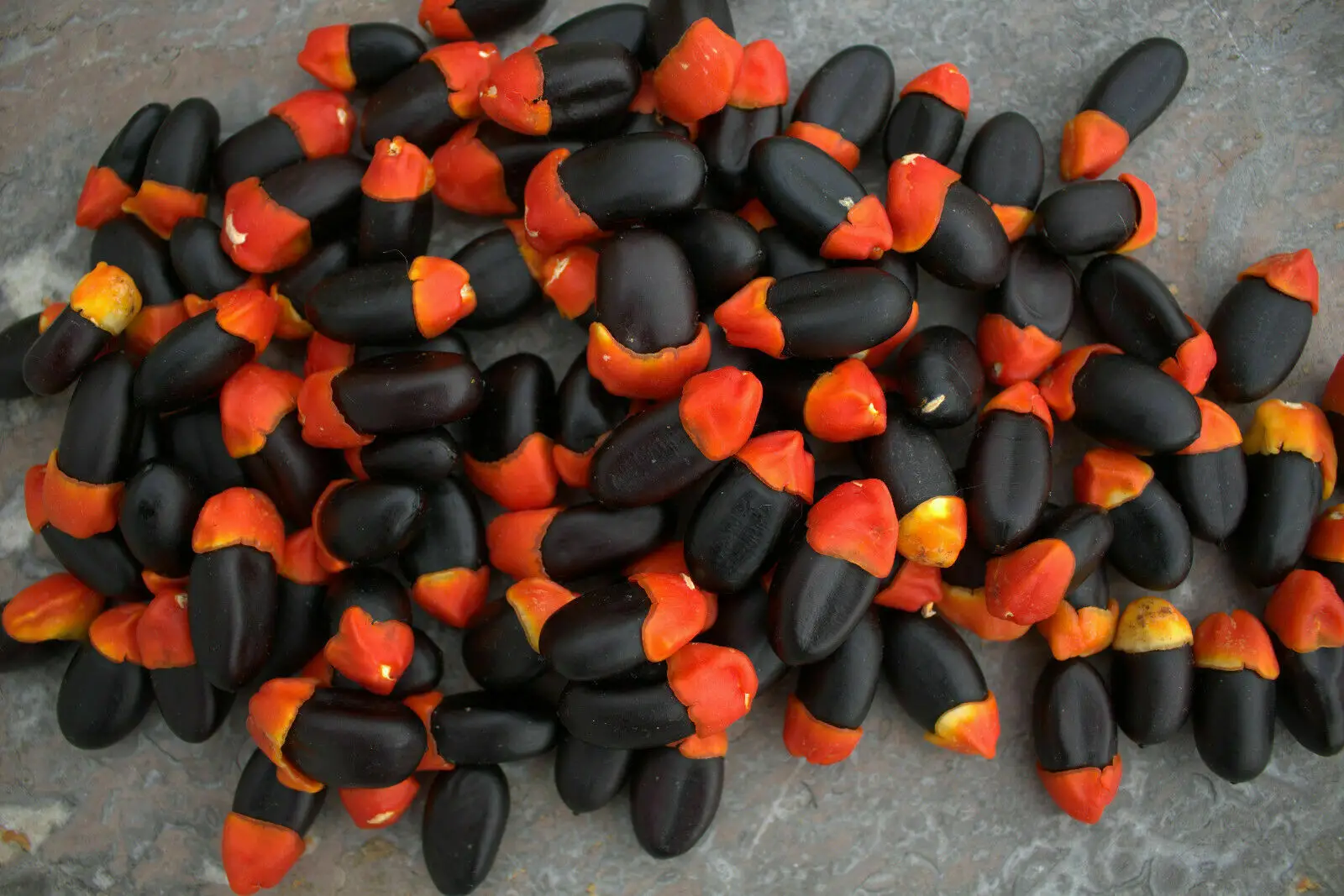
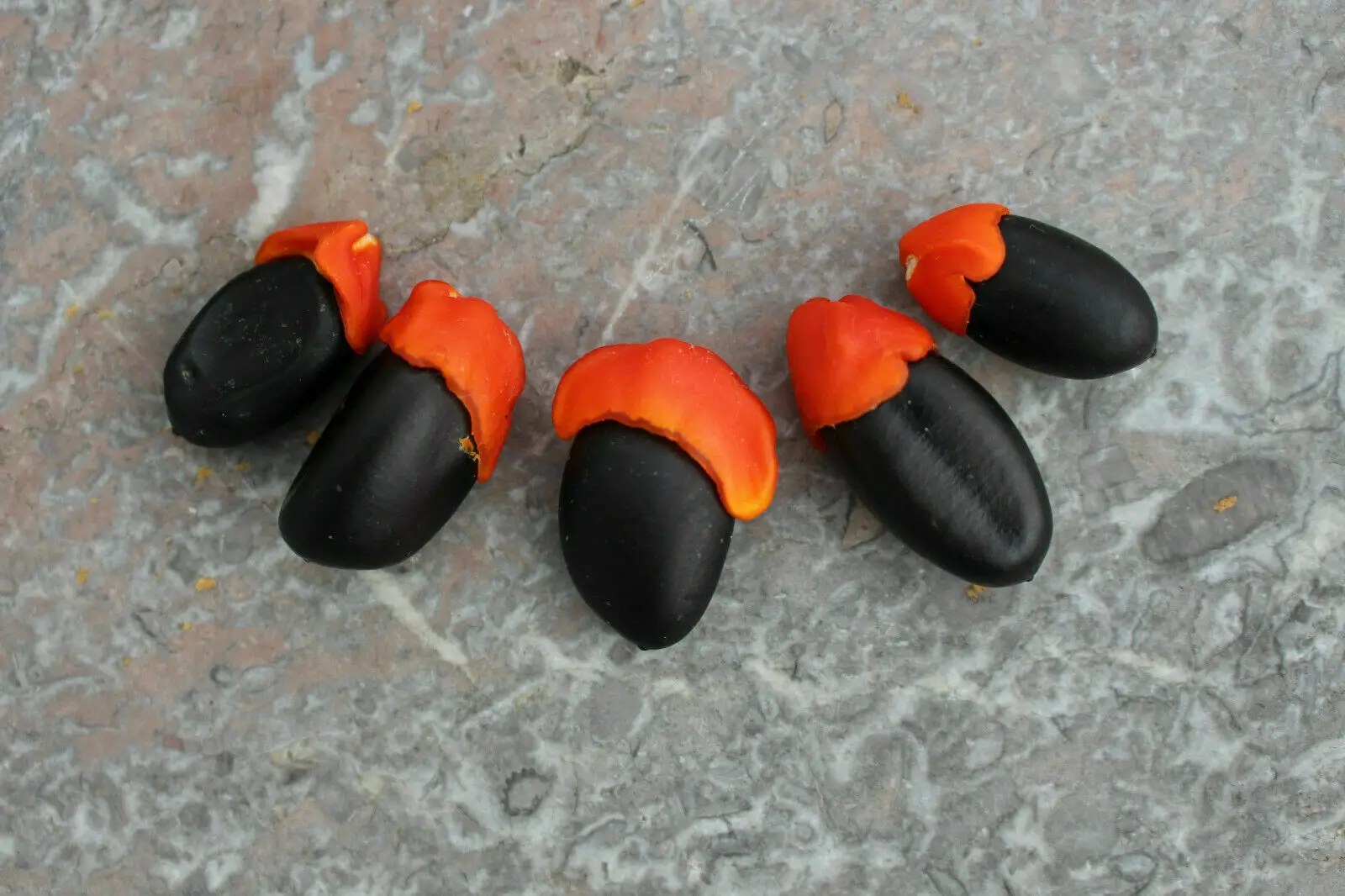
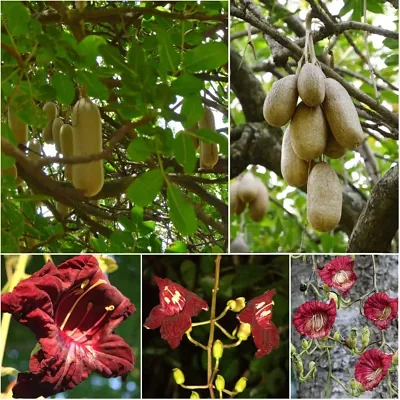
But here’s what makes Afzelia quanzensis absolutely irresistible: its seeds. Each thick, woody pod splits open to reveal 6 to 10 glossy jet-black seeds capped with a brilliant scarlet or orange aril—nature’s perfect jewelry component. These seeds have found “huge global demand” and are actively explored by artisans and jewelers around the world for necklaces, pendants, and ornaments. Holding one in your hand, you understand instantly why: the contrast is stunning, the finish is naturally lustrous, and the shape is elegantly oblong. Growing this tree means harvesting raw material for handcrafted beauty that far exceeds what you’d find in any bead shop. Beyond jewelry, the wood itself is legendary—a warm reddish-brown hardwood prized for fine furniture and cabinetry, resistant to termites and insects, capable of taking a high polish.
Cultivating Afzelia quanzensis from seed is remarkably straightforward. Seeds germinate easily at a rate up to 80%, typically emerging within 2-3 weeks and ready for transplanting once they develop two true leaves. This is a fast-growing tree when young, adding 50-60 centimeters annually, and reaching productive maturity in just 7 years. Place it in full sun—it demands bright, direct light—and provide deep, well-drained sandy or loamy soil with moderate fertility. The tree tolerates a wide range: temperatures from 18-36°C, annual rainfall between 400-1700mm, up to 1300m altitude. It’s remarkably drought-resistant once established, thanks to its deep root system, and actually thrives on the lean side—no need for heavy fertilization. Water sparingly; allow soil to dry between waterings. This is a deciduous species that naturally enters dormancy during the dry season, a protective rhythm coded into its African heritage.
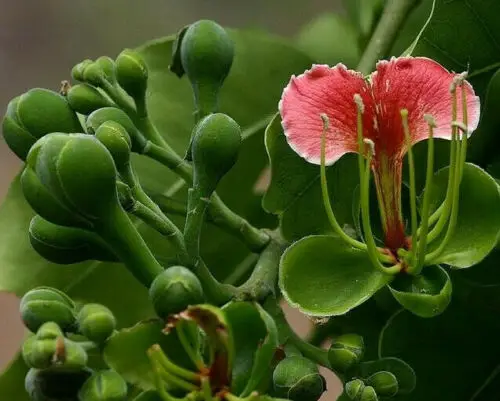
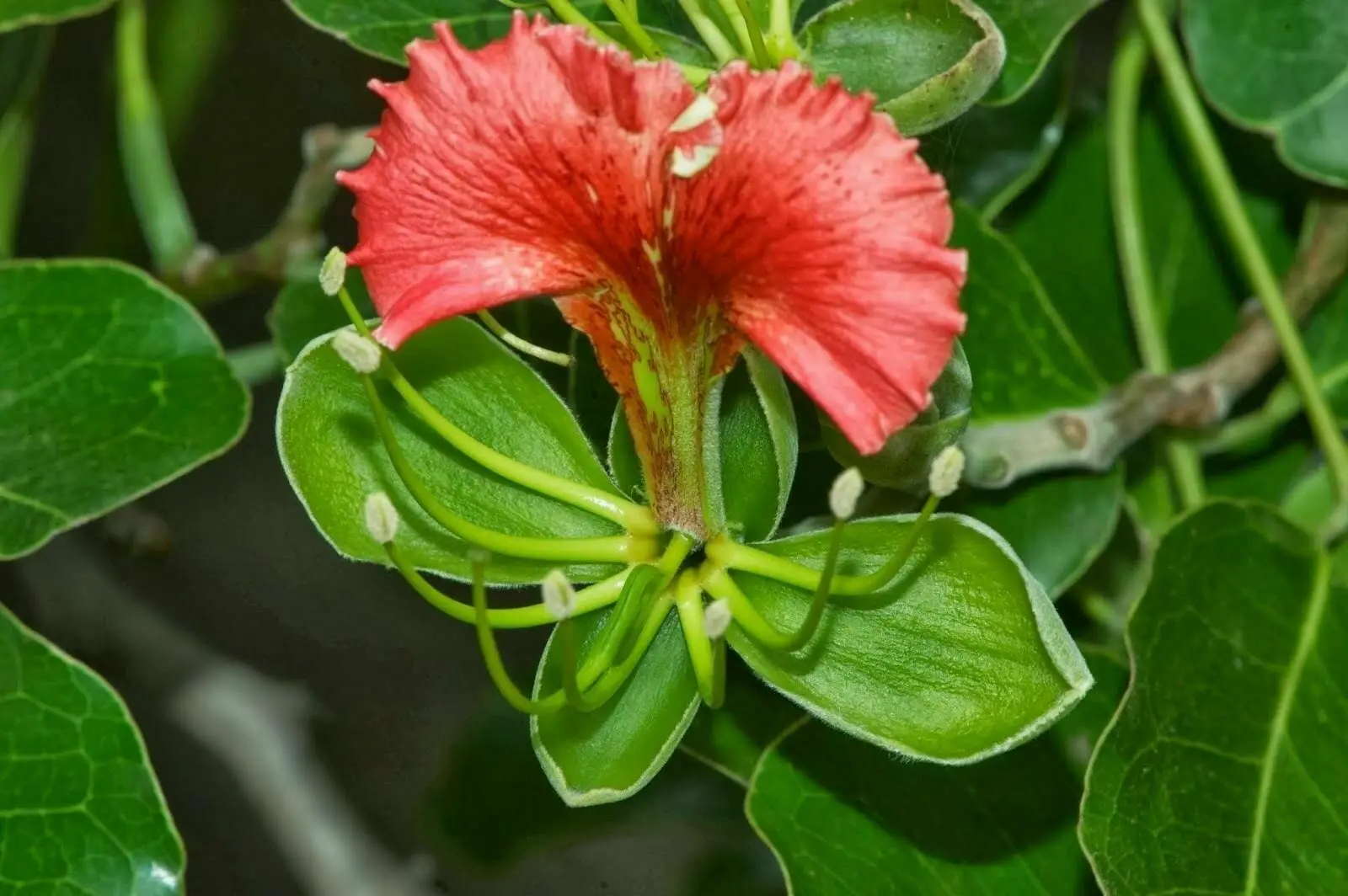
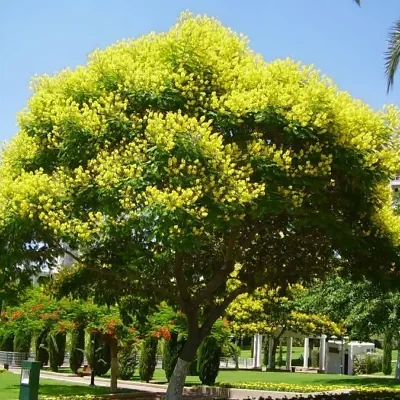
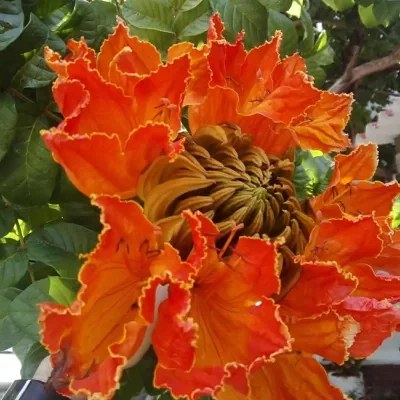
Imagine it: standing beneath a 35-meter giant with a spreading, umbrella-like crown offering dappled shade on a summer afternoon. Its glossy dark green compound leaves catch the light. Then in October-November, it erupts into flower—sweetly scented blooms with a single, distinctive large red petal, drawing honeybees and pollinators. And then, the payoff: those magnificent seed pods splitting open on the branch, each one a gift waiting to be harvested and transformed. Whether you dream of crafting natural jewelry, adorning your landscape with a stately timber tree, or honoring the deep botanical heritage of Africa, Afzelia quanzensis delivers on all fronts. Starting from seed connects you to centuries of tradition while building something entirely your own.
Germination Guide
🌍 Sub-Saharan Africa: Somalia to South Africa
Easy
Afzelia quanzensis (Pod Mahogany) is a valuable African timber tree. Seeds germinate easily with up to 90% germination rate in 11-28 days. Mechanical scarification can achieve 100% germination in 2.5 days.
Germination
Germination time
Expect germination in
10 – 28 days
Temperature
Min 18°C
Ideal 25°C
Max 40°C
Substrate moisture
💧 Medium
Sowing depth
Lightly covered
Seed Pre-treatment
-
💧
Soaking — 24 hours
Water soaking for 12-24 hours hastens germination; remove aril before planting
-
🔨
Mechanical scarification
Mechanical scarification (nicking seed coat) significantly increases germination; optional but recommended
-
📋
Additional notes
Pre-treatment not necessary but optional scarification or water soaking accelerates germination
Substrate & Container
Recommended substrate
River sand and compost (5:1 mixture)
Recommended container
Seedling tray
Growing Tips
Use large seeds for better seedling survival. Press seeds into substrate. Keep moist. Transplant at 2-leaf stage. Protect seedlings from frost for first 2 years. Tree produces deep taproot so transplant while still small.
Only logged in customers who have purchased this product may leave a review.



Reviews
There are no reviews yet.