
Description
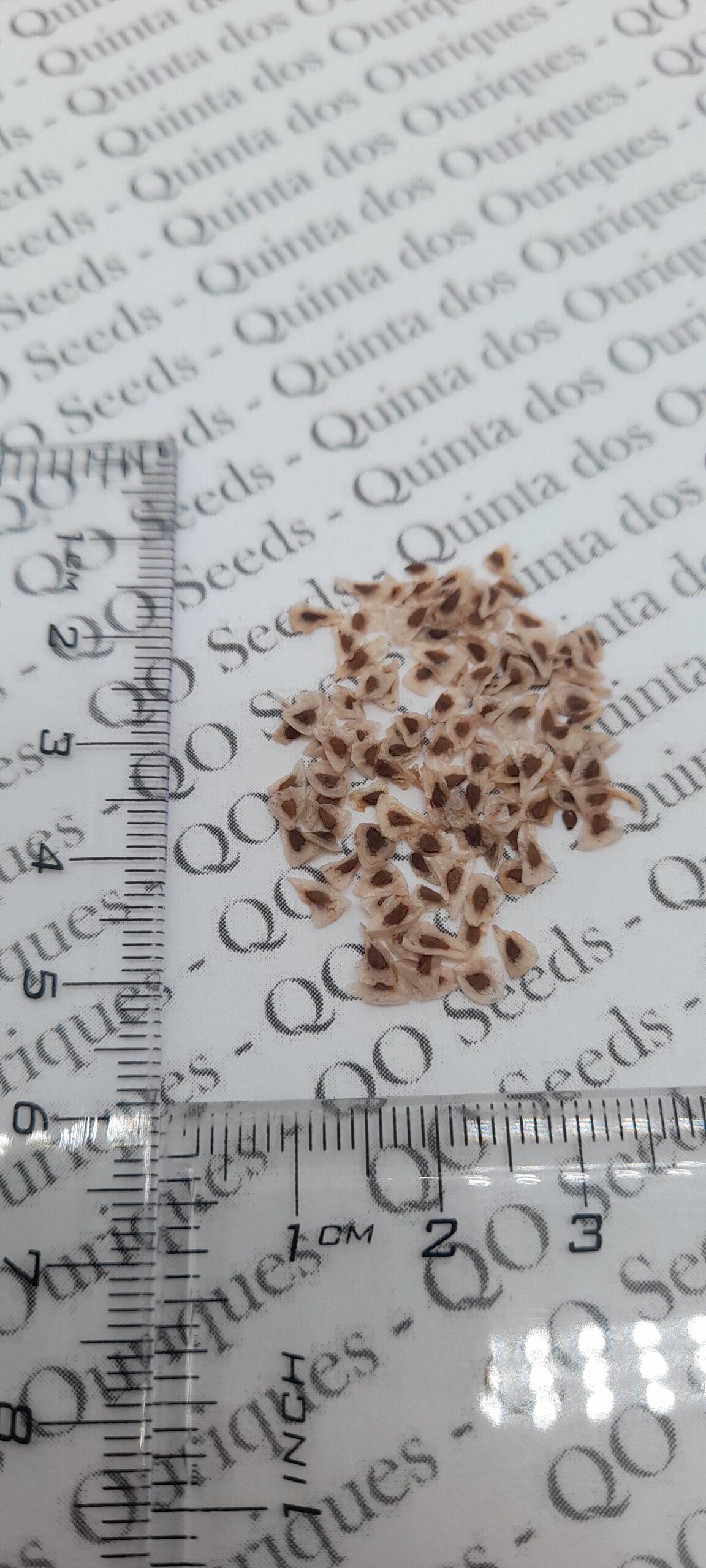
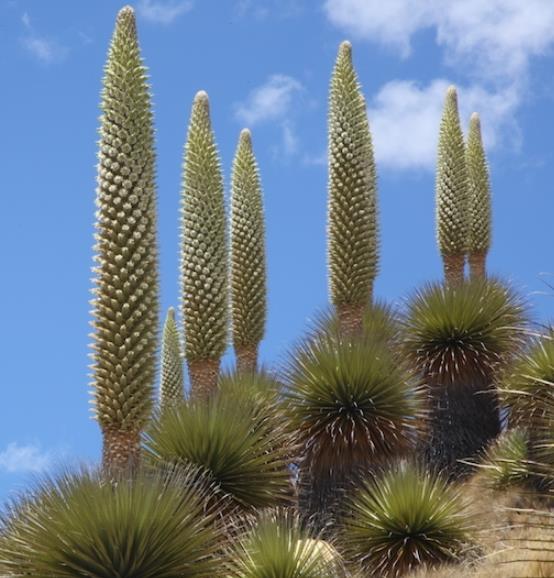
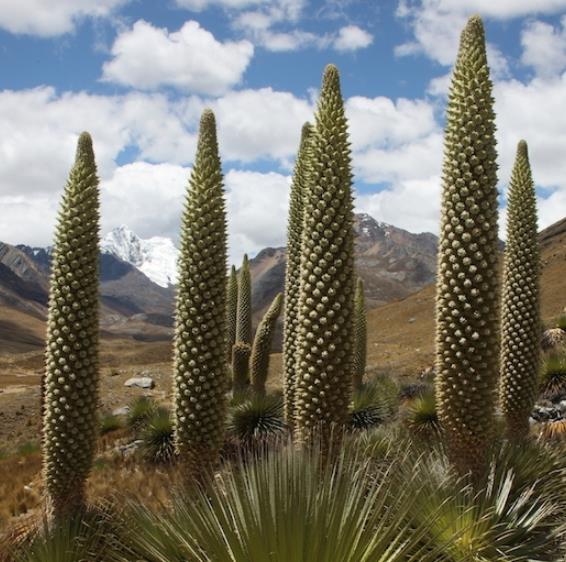
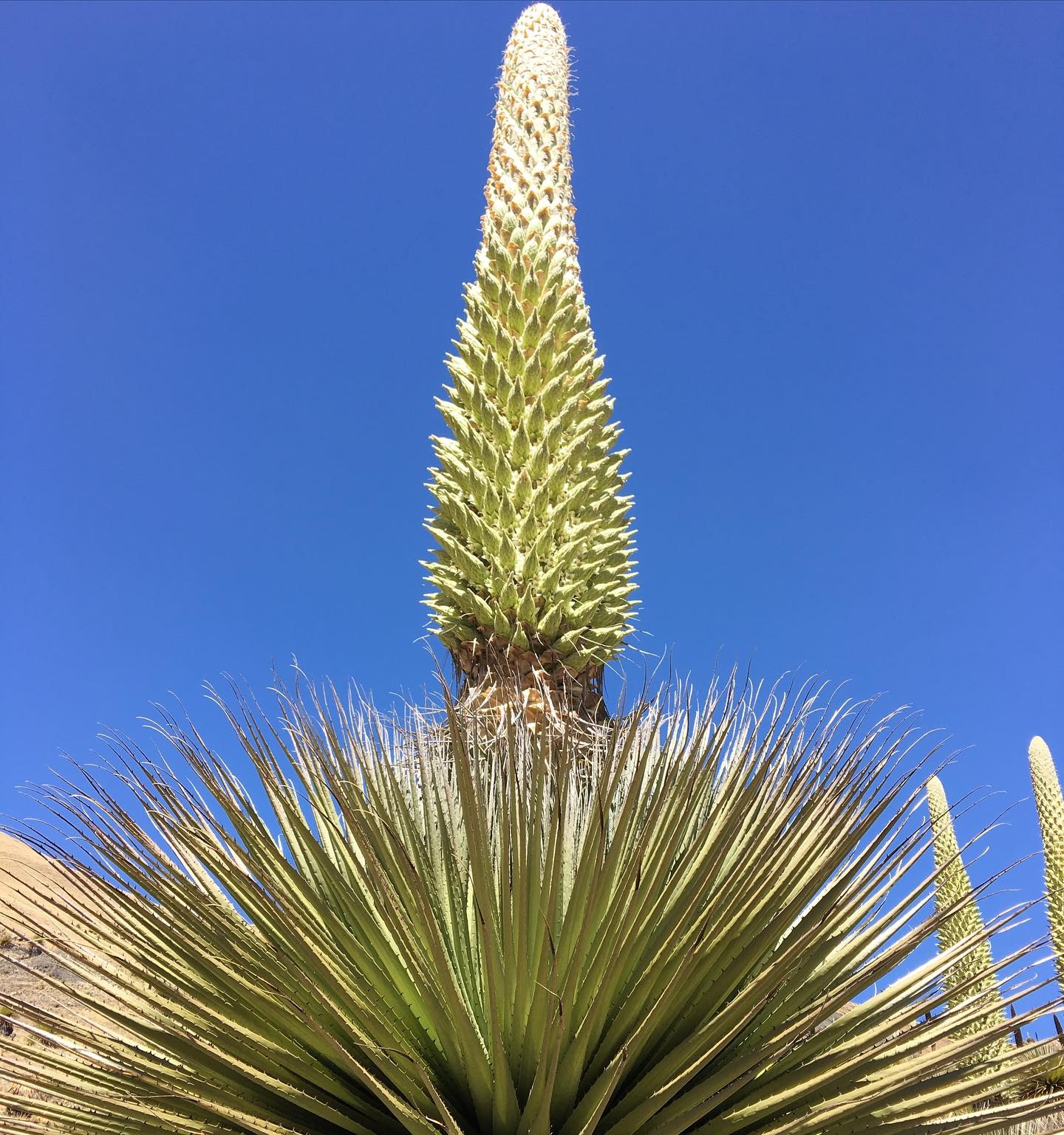
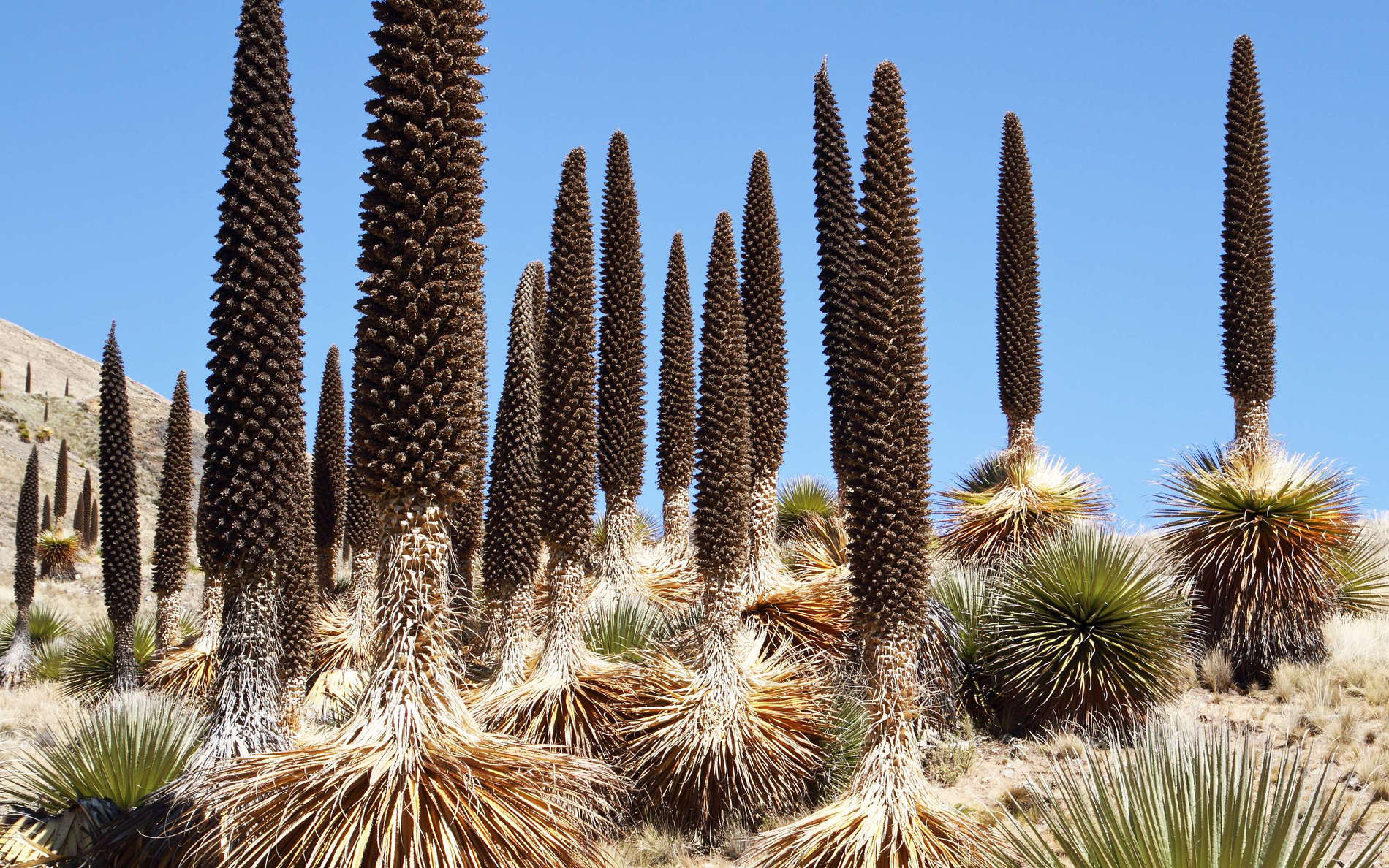
Puya raimondii is the largest species in the bromeliad family, in its vegetative state it can reach several metres in height, and when it blooms it produces a towering inflorescence up to about 9 to 10 m high (and in some reports even higher). It is monocarpic: after the prolonged period of growth it sends up its massive flower spike, sets seed (potentially millions of seeds) and then dies.
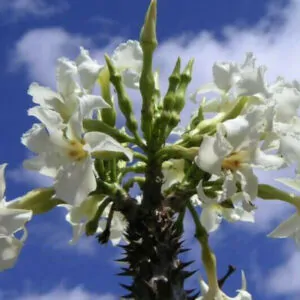
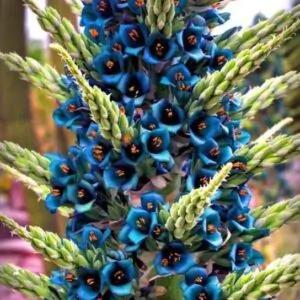
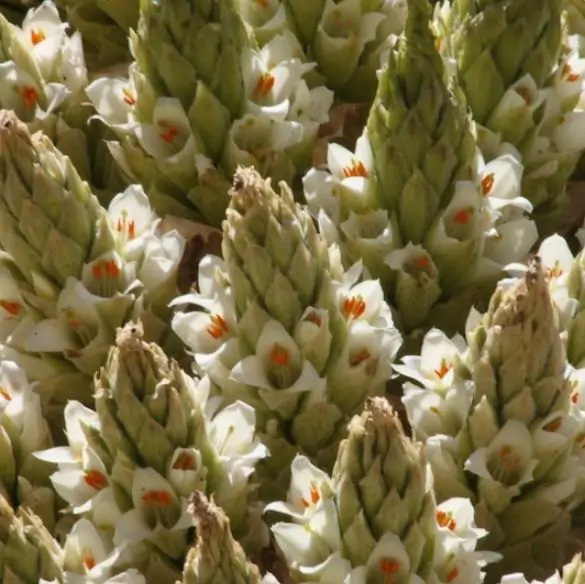
Native to the high Andes of Peru and Bolivia at elevations roughly between 3,000 to 4,800 metres, it grows on rocky slopes with poor soils, high sun exposure, and cold nights. The leaves are long, stiff, often spiny-edged; the trunk (in older plants) can become thick and substantial. The flower spike is dense with thousands of flowers and produces a massive seed set.
Because of its extreme habitat and unique life-history (very slow growth, long lifespan, one-time flowering), it is considered endangered in its natural range.